
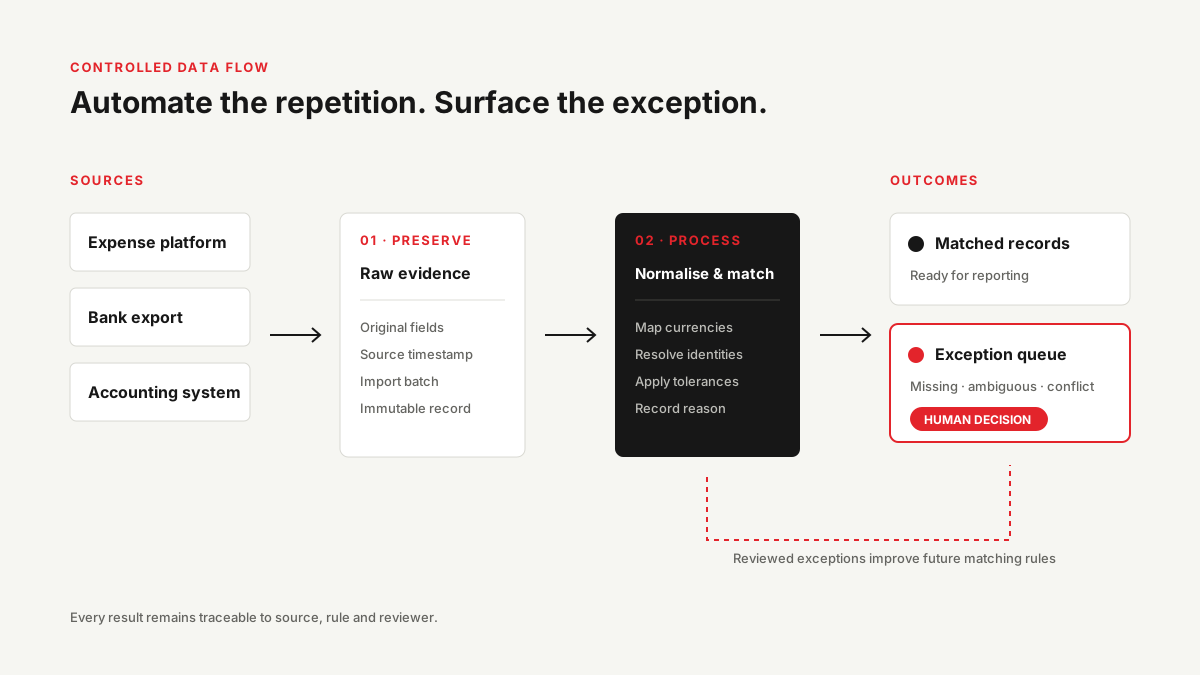
Finance reconciliation automation collects records from source systems, normalises them into a shared structure, matches records using explicit rules and sends uncertain cases to a person. The system should preserve original evidence and make every exception visible. It should never create a clean report by silently discarding what did not fit.
Why reconciliation is harder than moving data
Payment gateways, expense tools, banks and accounting platforms represent the same event differently. Names vary, timestamps use different zones, refunds arrive separately, categories change and shared costs need allocation.
The easy demonstration is to copy a row from one system to another. The production problem is deciding whether two records describe the same economic event and explaining the decision later.
The six-layer architecture
1. Source collection
Collect records by webhook where timely events are available and by schedule where they are not. Record the provider, source identifier, observed time and collection run. Check pagination, date windows, rate limits and late-arriving updates.
2. Raw evidence retention
Retain the original business record as received, subject to data-minimisation and retention requirements. The raw layer is evidence, not the reporting model. This lets transformation logic improve without rewriting history.
3. Normalisation
Map source shapes into a common model: transaction, employee, department, category, currency, tax, amount, timestamp and status. Keep mappings configurable. People join, departments change and finance introduces new categories. Hard-coded mappings turn ordinary business change into an engineering incident.
4. Matching
Use deterministic rules first. A match may require source identifiers, amount, currency, date tolerance and account ownership. Version each rule and retain which rule produced the match. Fuzzy matching is not permission to force a result. Uncertain cases belong in the exception queue.
5. Exception review
Show the reviewer both source records, the failed rules and the proposed resolution. Capture the decision in a way that can improve future handling without altering past evidence.
6. Reporting layer
Build reports from normalised, matched records and explicit exception state. Current numbers can update continuously when sources support it, while closed reporting periods remain governed by finance policy.
Controls that matter
Idempotency
The same provider event may arrive more than once. Use stable source identifiers and idempotency keys so a retry cannot duplicate an expense, payment or journal entry.
Reversibility
Where a write affects financial state, prefer proposed entries or review queues before direct posting. Define how an incorrect action is reversed.
Separation of duties
The workflow can prepare and validate while an authorised person approves consequential entries. Automation must not erase the control finance already relies on.
Auditability
Record source, transformation version, match rule, approval, timestamps and resulting identifiers. A spreadsheet showing the final value is not an audit trail.
Visible failure
If a source is unavailable or a batch is incomplete, fail visibly or mark the report partial. Yesterday's complete number presented as today's number is worse than an explicit delay.
A real operating pattern
Swiss Product Studio built an expense-data pipeline for a company with multiple remote teams. Expense information lived across several platforms and required monthly export, cleaning, mapping and reconciliation.
The delivered system retains original records and creates a separate unified layer. It collects by webhook or schedule, keeps employee data synchronised and lets finance maintain category and department mappings. Shared expenses can be attributed across the employees involved. The system is live and stable with tens of thousands of records processed; the published case does not disclose confidential client data.
The transferable lesson is simple: preserve evidence, make mappings operable and treat exceptions as part of the product.
What can AI contribute?
AI can help with unstructured inputs such as invoice descriptions, receipts, email attachments or inconsistent merchant text. It can propose a category, extract fields or explain why a case looks unusual.
Keep deterministic controls around arithmetic, currency conversion sources, duplicate detection, account permissions, approval limits, posting state, retention and audit records. Use AI to prepare a decision, not to make the ledger true by assertion.
Implementation checklist
- Name the authoritative system for each field.
- Document period-close and late-arrival rules.
- Inventory every source and its pagination behaviour.
- Define a canonical transaction identity.
- Preserve source identifiers and timestamps.
- Version mappings and matching rules.
- Test duplicates, refunds, reversals and partial batches.
- Create an explicit exception owner and response target.
- Monitor missing sources and abnormal volume.
- Reconcile automated output against a trusted period before launch.
- Define backup, recovery and credential-rotation procedures.
Metrics for finance automation
Measure percentage matched automatically, exceptions by reason, manual minutes per exception, time from source event to current report, duplicate actions prevented, corrections after approval, source completeness and cost per processed record.
An improving match rate is useful only if correction rates remain low and exceptions are not being hidden.
Frequently asked questions
Can reconciliation be fully automated?
The ordinary path often can be. Unusual, ambiguous or high-value cases should remain reviewable. The target is efficient exception handling, not the elimination of accountability.
Should raw source records be deleted after normalisation?
Not by default. Retention depends on legal, contractual and operational requirements, but the system should preserve enough source evidence to explain the result. Apply data minimisation and a documented retention policy.
Do we need to replace our accounting software?
Usually no. Automation can create a reliable data and validation layer around the systems finance already uses. Replacement is a separate business decision.
Automate the repetition; surface the exception
Good finance automation does not make control invisible. It concentrates attention on the small number of cases where control is valuable.
Explore Swiss Product Studio's finance operations and reconciliation work or book a 30-minute operations review with one recurring finance process and its current exception list.